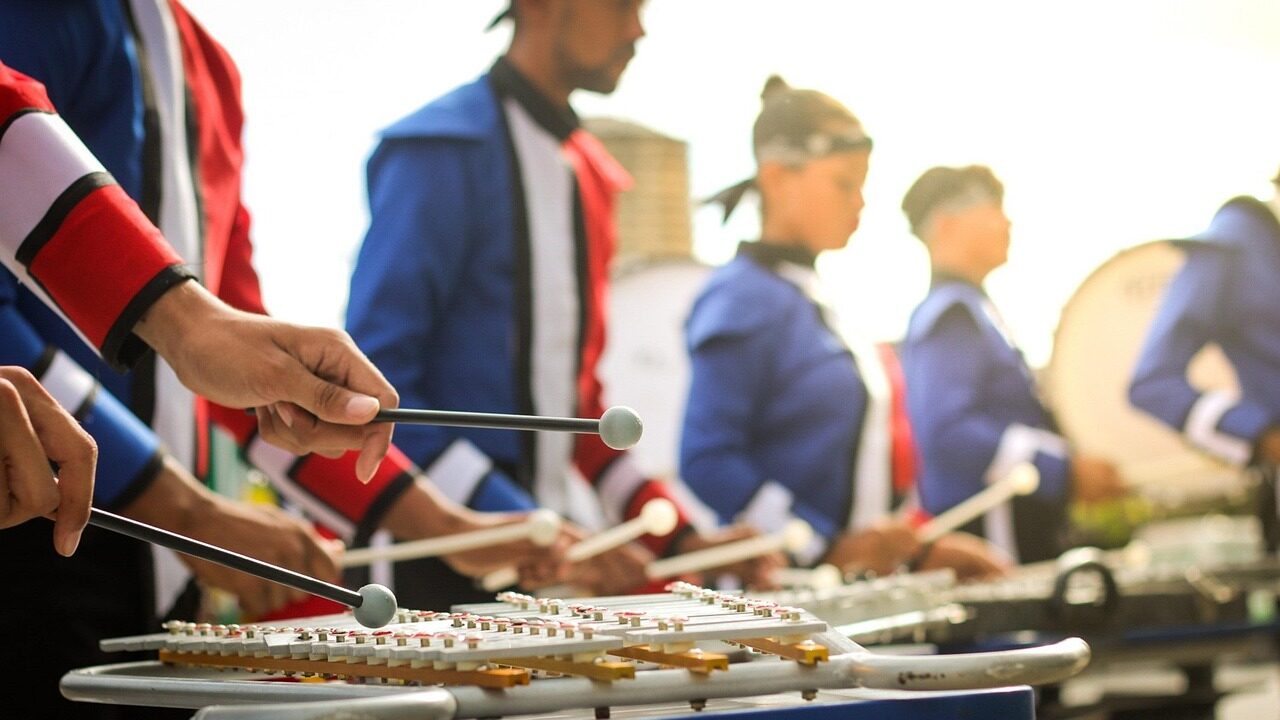
You already know marching band is loud, proud, and a little bit addictive. What you might not realize is that it’s also one of the most efficient brain workouts you can give yourself. You’re reading drill while breathing like a runner, tracking tempo like a metronome, and syncing your every step with a block of humans, sometimes in 95-degree heat. That “triple threat” mix of cognitive challenge, physical conditioning, and social-emotional coordination lights up your brain in ways a worksheet never could. If you want sharper focus, better memory, greater stamina, and real leadership skills, the field is your lab.
The Triple Threat: Cognitive, Physical, and Social-Emotional Demands
Marching band isn’t one activity: it’s three layered at once. You read music and execute drill (cognitive). You breathe, step, and carry an instrument, often heavy, over long reps (physical). And you respond to a director, a drum major, section leaders, and the vibe of the block (social-emotional). That stack forces your brain to integrate complex inputs fast.
Cognitively, you’re juggling executive functions: planning (your path), working memory (counts and sets), inhibition (don’t overblow on the release), and cognitive flexibility (adjust the arc when the line drifts). Those are the same mental muscles you rely on for studying, testing, and problem-solving.
Physically, you’re doing low-to-moderate-intensity cardio with intervals: long stands of playing punctuated by bursts of drill. Your posture, breath control, and core activation create a stable platform for precision. That matters because reliable oxygenation and body control reduce mental fatigue and sharpen attention.
Social-emotionally, you practice synchrony and self-regulation. You learn to read micro-cues, hand flicks, stick heights, a glance down the line, and respond without drama. That blend of empathy and discipline transfers to how you collaborate in class, present in groups, and keep your cool when things go sideways.
Stack these together and you get compounding gains. Your brain isn’t only learning notes or steps. It’s learning how to manage complexity under time pressure, calmly.
How Marching Rewires the Brain: Timing, Memory, and Spatial Skills
Music training is famous for neuroplasticity, but marching adds a moving map. Each rep is a living puzzle your brain rewires to solve more efficiently.
Timing. You internalize tempo, subdivision, and rhythmic feel while your feet execute an 8-to-5 stride. That dual-motor timing trains your cerebellum and basal ganglia to coordinate rhythmic precision with movement. Over time, you calibrate micro-timing: the difference between a release that blooms and one that sags.
Memory. You’re running two memory systems at once: auditory/sequence memory (music and counts) and spatial/episodic memory (sets, landmarks, transitions). When you hear “set 32,” your brain retrieves a mental snapshot: interval, yard line, yard hash, who’s on your left shoulder, what the brass is doing in the hold. That cross-linking strengthens working memory and recall speed.
Spatial skills. Drill charts teach you to navigate a grid, estimate distance on the fly, and adjust arcs dynamically. You learn to “feel” straight lines without staring at your feet, and to correct spacing by peripheral vision. That’s real-world spatial reasoning you use in driving, sports, and any task with moving parts.
The kicker: you learn under constraints. Instruments limit vision and range of motion. Weather messes with sound. Crowds add pressure. Constraints force efficient neural pathways. You get better not by memorizing more, but by refining how fast and accurately you process cues.
Fitness With Finesse: Breath, Endurance, and Precision Movement
You can’t fake fitness in a two-minute company front. Marching band builds endurance differently from a jog because your breath, posture, and precision can’t fall apart.
Breath. Wind players become masters of diaphragmatic breathing: full, low inhales: steady, resistive exhales. You learn to meter air across phrases while moving, which stabilizes heart rate and keeps tone centered. Even percussionists benefit, coordinated breath reduces tension and improves timing.
Endurance. Rehearsals blend long-duration aerobic work (stand-and-play plus drill reps) with short bursts (tempo pushes, high-step sequences, fast direction changes). That interval profile boosts cardiovascular fitness and recovery. Over a season, your legs, hips, and back develop the stamina to hold posture and horn angle without wobble.
Precision movement. Clean sets come from micro-control: rolling through the feet, level shoulders, quiet upper body, and consistent step size. You build proprioception, the sense of where your body is in space, so you can correct without overthinking. It’s athletic, but it’s also exacting. A millimeter wider interval, multiplied across a block, reads as chaos. Your brain learns to detect and fix that in real time.
And yes, it’s strength training too. Tubas, battery percussion, and even mellophones demand grip and upper-body endurance. Core stability is nonnegotiable. You’re not chasing max weight, you’re training postural strength that supports fine motor control and breath.
From Teamwork to Leadership: The Human Skills Marching Band Builds
If you want a masterclass in people skills, look down the line. You practice shared attention, clear communication, and accountability every rep.
Teamwork. You align to a collective goal: sound great, look clean, move as one. That means listening across the ensemble, not just to your stand partner. You learn to give and take feedback without ego. Your success is visible, which keeps you honest.
Leadership. Whether you wear a sash or not, you lead. You set a consistent step, cue entrances with body language, and model focus when the sun hits and the turf radiates heat. Section leaders learn to coach peers, run efficient warm-ups, and solve problems on the sideline without waiting for staff.
Communication. You get fluent in nonverbal cues: eye contact, posture, a chin flick that says “interval.” You also get good at quick, respectful verbal calls, crisp, specific, and calm under pressure. That’s exactly how strong leaders run meetings and projects.
Resilience. Performances don’t pause for a broken reed or a slipped drum sling. You recover. You adapt. You learn to let mistakes pass through you and lock back in at the next count. That emotional elasticity lowers anxiety in other high-stakes moments, tests, interviews, tryouts.
Better Grades and Calmer Minds: Transfer to School and Well-Being
The benefits don’t stay on the field. The same systems you train, attention, memory, breath, and self-regulation, show up in your schoolwork and mental health.
Academics. Marching band reinforces routines: arrive prepared, track details, reflect after reps. That discipline maps neatly onto assignments and exam prep. You also strengthen executive function, the “air traffic control” for your brain that organizes tasks and resists distractions. Students who practice complex, timed skills tend to read denser material more effectively and keep focus longer.
Study stamina. Because you build aerobic capacity and breathing control, you can sit with hard work without frying your attention. A calm, steady respiratory rhythm dampens stress responses and supports sustained concentration.
Stress and mood. Music-making and synchronized movement both release feel-good neurochemicals and reduce cortisol. Add community, a built-in support network, and you’ve got a potent buffer against anxiety. Many performers notice that post-rehearsal clarity where problems feel smaller and plans feel doable.
Sleep. Consistent physical exertion and set rehearsal schedules help anchor your sleep-wake cycle. Better sleep tightens memory consolidation, which means what you learn in class actually sticks.
Make It a Brain Workout: Practice, Habits, and Getting Started
You don’t need more hours. You need smarter reps. Treat marching like a brain gym and you’ll feel the gains quickly.
Build a breath-first warm-up. Start with two minutes of nasal breathing, then five cycles of 4-7-8 or box breathing. Add long-tone ladders while you walk slowly. You’re priming oxygenation, focus, and tone in one go.
Chunk your learning. Don’t run the whole show mindlessly. Work in micro-sets: two to four counts, then eight, then a phrase. Lock technique first (step size, horn angle, stick heights), then layer musical nuance. Your working memory retains small, error-free chunks better than long, sloppy reps.
Rehearse the map in your head. Away from the field, close your eyes and “walk” the drill: see the yard lines, feel the intervals, hear your part, breathe the phrase marks. Mental rehearsal strengthens the same neural circuits as physical reps and makes on-field fixes faster.
Train timing off-instrument. Use a metronome app with subdivisions. Clap and step through accents. Alternate odd meters. If you’re percussion, practice quiet strokes while standing in marching posture. If you’re winds, add whisper tones or air-patterning to keep breath engaged.
Calibrate recovery. Between reps, don’t doom-scroll. Take 30–60 seconds for controlled breathing and quick notes: what improved, what to try next. That tiny reflection loop locks learning.
Cross-train smart. Two to three short sessions a week of mobility, core, and light cardio pay off. Think hip openers, ankle stability, planks, farmer’s carries, and 10–15 minute zone 2 jogs or cycles. Keep it simple and consistent.
Fuel and hydrate. Your brain is an energy hog. Aim for water plus electrolytes on hot days, and steady carbs with protein before long rehearsals. Post-practice, eat within an hour, your recovery and next-day focus will thank you.
New to marching band? Start small. Learn your instrument’s tone fundamentals and basic footwork at a slow tempo. Add a metronome and mirror. Increase tempo only when posture and sound stay consistent. Progress feels slow, then suddenly you’re gliding through sets that used to scramble your brain.
Conclusion
If you’re looking for the ultimate brain workout, marching band delivers the triple threat: it sharpens cognition, builds real-world fitness, and forges the social-emotional grit you’ll use everywhere else. You practice handling complexity with grace, on time, in tune, and with people you trust. Keep showing up, stack smart reps, and let the field be where your focus, stamina, and confidence level up all season long.
No responses yet