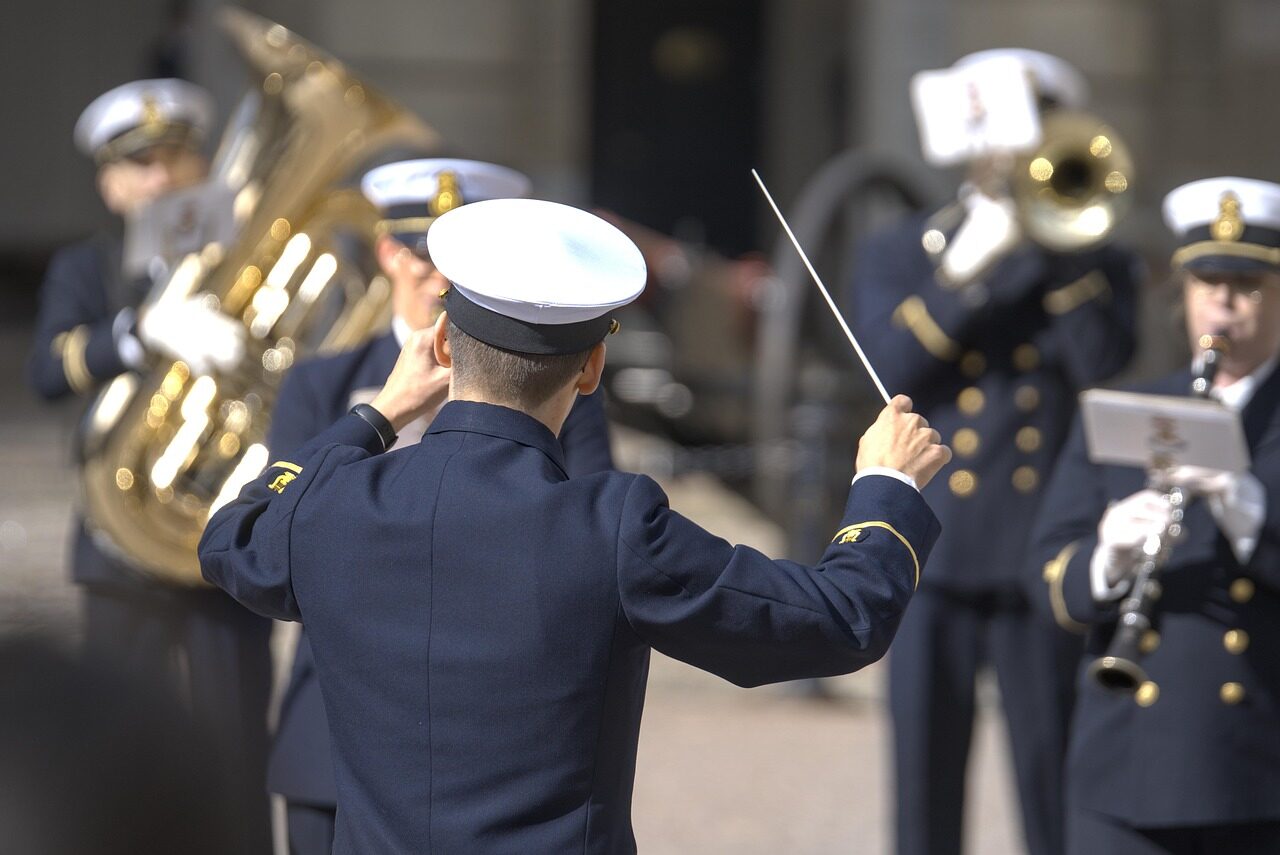
If you’ve ever watched a marching band nail a complex halftime show, you’ve seen a living lesson in how marching arts improve student cognitive development and coordination. The activity fuses music, movement, memory, and teamwork in real time. For you or your students, that mix trains attention, boosts executive function, and sharpens motor control, skills that spill over into the classroom and daily life.
What Counts As Marching Arts
You might picture a traditional marching band, but the marching arts umbrella is much wider. It includes drum corps, indoor drumline, color guard, winter guard, pep bands, and even emerging hybrid ensembles. Each variant blends music and motion with slightly different demands, but all of them train your brain and body to work together.
Ensemble Types And Roles
You’ll find winds, battery and front ensemble percussion, and color guard working as a single system. Winds manage tone, breath, and articulation while moving. Battery percussion balances stick heights and timing with locomotion. The front ensemble anchors the musical grid. Color guard adds visual storytelling using equipment and dance. Each role pushes you to synchronize personal mastery with a shared design.
Core Skills: Music Literacy, Drill, And Ensemble Cohesion
You learn to read rhythms, interpret dynamics, and internalize tempo while absorbing drill coordinates and form transitions. Cohesion comes from listening across the ensemble, feeling pulse, and aligning body angles with visual intent. The result? You practice rapid context switching, notes to feet, counts to yard lines, which strengthens how you organize and apply information.
The Multitasking Demands Unique To The Activity
Marching arts require you to play or spin precisely while moving in specific step sizes, pathways, and facings. You’re tracking interval spacing, form shape, and phasing with the group while projecting musical phrasing. This layered multitasking is rare in other activities and is exactly why marching builds attention control, working memory, and coordination so effectively.
The Cognitive Benefits: Attention, Memory, And Executive Function
Cognitive gains show up fast because you constantly manage sensory input (sound, sight, feel) and rules (tempo, counts, drill). Over time, you get better at focusing, remembering sequences, and directing your behavior toward a goal, core executive functions that help you study, test, and communicate more clearly.
Selective Attention And Inhibitory Control
On the field, you filter distractions, crowd noise, weather, chatter, and lock onto the conductor, met, or internal pulse. You also suppress impulses (like rushing on adrenaline) to maintain timing and tone quality. This selective attention and inhibition training transfers to classrooms where you ignore off-task stimuli and stick to the plan under pressure.
Working Memory And Processing Speed
You hold counts, coordinate numbers, visual cues, and musical phrases in your head while updating them on the fly. That’s working memory. Because shows change rapidly, you also accelerate processing speed, recognizing patterns, predicting the next set, and adjusting posture or fingerings before it’s too late. Faster, more accurate updates equal better learning outcomes.
Academic Transfer To Reading, Math, And Language
Rhythm and phrasing support prosody in reading: counting and subdivision reinforce fractions and ratios: drill teaches spatial transformations that relate to geometry. You also practice vocabulary in music and movement, which strengthens language networks. In short, the way you track counts, structure phrases, and navigate space mirrors how you organize text, numbers, and ideas.
Building Coordination: Motor Skills, Spatial Awareness, And Timing
Coordination isn’t just “not tripping.” It’s a blend of precise steps, upper–lower body independence, and awareness of where you are in space and time. Marching arts train all three together so you move with control and purpose.
Bilateral Integration And Cross-Lateral Movement
You’ll coordinate left–right limbs differently (think: horn carriage vs. foot timing, or left-hand catch with a right-hand release). Cross-lateral patterns, opposite arm/leg action, build neural connections across brain hemispheres, improving overall motor fluency. Over time, your gait, posture, and fine-motor control get cleaner because both sides of your body communicate better.
Rhythmic Entrainment, Pulse Consistency, And Timing
Locking into a steady pulse (with or without a metronome) trains your internal clock. You practice entrainment by aligning micro-timing, attack, release, rebound, with the ensemble. That consistency improves reaction time and reduces jitter in movement. When the tempo changes or phasing occurs, you learn to realign quickly, a skill that enhances temporal precision beyond the field.
Proprioception, Form Awareness, And Field Mapping
Proprioception is your sense of body position. You sharpen it by maintaining horn angles, blade planes, and posture while stepping exact distances. Field mapping, reading yard lines, hashes, and diagonals, teaches you to build and update mental maps. You stop marching “to people” and start marching “to space,” which builds reliable spatial judgment.
Why It Works: Neuroscience Behind Music–Movement Integration
When you pair music with movement, you recruit large, overlapping neural networks. That overlap accelerates learning and drives neuroplastic changes, your brain literally reorganizes to handle complex tasks more efficiently.
Multisensory Integration And Neuroplasticity
Hearing, sight, and proprioception converge in association areas of the cortex. Repeated, coordinated practice strengthens the connections between them, making sensory processing faster and more accurate. The high repetition of marching reps, run-throughs, sets, chunked phrases, acts like cognitive strength training, reinforcing efficient pathways.
Auditory–Motor Coupling And The Cerebellar–Basal Ganglia Network
Auditory cortex links tightly with motor planning regions. The cerebellum fine-tunes timing and error correction: the basal ganglia support pattern learning and sequence initiation. Marching arts load this circuit constantly: listen, predict, move, adjust. That coupling makes you better at both keeping time and executing clean, economical movement.
Arousal Regulation, Stress Resilience, And Focus
Performing under lights elevates arousal. Through rehearsals and shows, you learn to regulate breathing, channel adrenaline, and reset attention after errors. This trains your autonomic nervous system to recover quickly, useful for tests, presentations, and high-stakes moments. The payoff is steadier focus under stress.
Implementing Marching Arts In Schools And Programs
You don’t need world-class resources to gain the benefits. What matters is progressive skill-building, thoughtful practice design, and inclusive safety standards that meet students where they are.
Age-Appropriate Progressions And Scaffolding
Start younger students with posture, step basics, and pulse games: add simple visual phrases and call-and-response rhythms. For middle grades, introduce drill coordinates, dynamic shaping, and basic equipment work. High schoolers can handle layered responsibilities, complex forms, mixed meters, body choreography, once fundamentals are steady. Scaffold so difficulty rises only when consistency is real.
Practice Design: Chunking, Reps, And Feedback Loops
Short, focused reps beat endless run-throughs. Chunk a phrase, define success (e.g., 8 in a row at tempo), and give immediate feedback. Alternate full-out reps with slow practice to cement accuracy. Use count sheets and coordinate books, then wean off aids to strengthen memory. Build peer feedback into sectionals so students learn to self-assess, not just wait for staff.
Inclusive Adaptations, Safety, And Load Management
Adapt drill for different mobility needs, adjust step sizes, equipment, or pathways without sidelining students. Rotate high-load roles, schedule water and shade, and monitor cumulative impact from rehearsals, sports, and academics. A simple warm-up (breath, flexibility, activation, then skills) and a cooldown protect joints and voices while preserving long-term participation.
Measuring Progress And Outcomes
If you want results, measure them. Clear metrics show whether your rehearsals build the skills you care about and help you adjust before show week.
Observable Field Metrics: Step Size, Interval, And Form Accuracy
Standardize step size (e.g., 8-to-5 or 6-to-5) and check it with yard lines. Track interval spacing to nearest half-step, and score form hits by first count of the set. Note drift, tilt, or dress alignment. These observable measures reveal whether spatial awareness and timing are improving.
Practical Cognitive And Motor Checks
Use quick attention tests like “freeze on cue,” off-beat claps, or silent count-ins to see if students internalize pulse. Memory checks, calling coordinates without books, or singing parts while marking time, expose working-memory growth. For motor control, watch for even step heights, quiet upper body, and consistent horn or equipment planes.
Reflection, Goal Setting, And Data-Driven Adjustments
Have students journal one micro-win and one focus per rehearsal. Set weekly goals tied to metrics, “90% form hits by count 1,” “tempo stable at 160 bpm.” When data stalls, simplify, slow down, or re-chunk. Celebrate improvements publicly: it reinforces motivation and the executive function skill of pursuing specific, measurable targets.
Conclusion
When you step onto a field or floor, you’re training more than a show, you’re training a brain–body system. That’s the essence of how marching arts improve student cognitive development and coordination. You build selective attention, working memory, and executive control while sharpening bilateral movement, timing, and spatial awareness. Carry out it with smart progressions, feedback-rich practice, and inclusive safety, and you’ll see gains in class, on stage, and far beyond the season. The music ends, but the benefits stick.
No responses yet