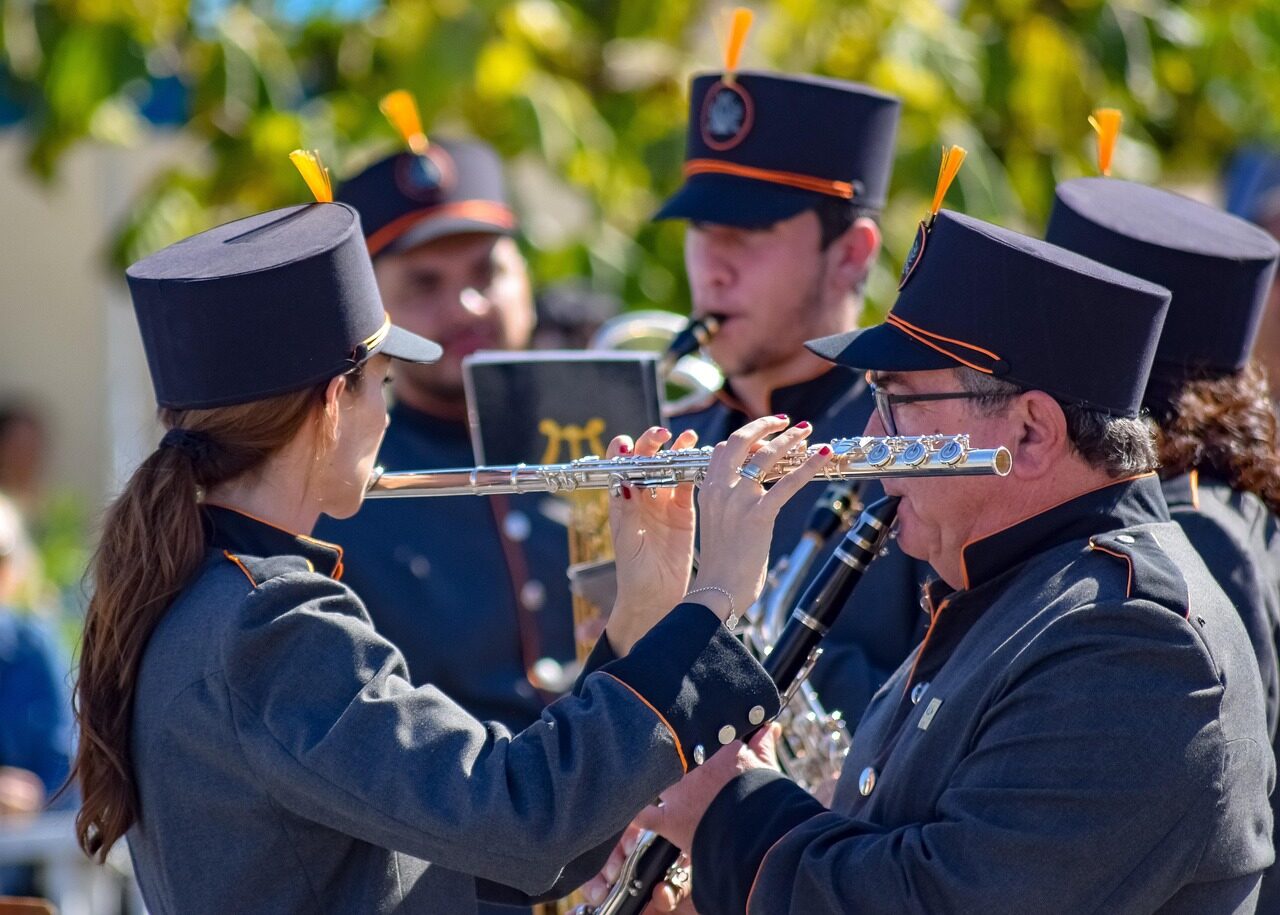
There’s a moment when your hands, breath, and instrument feel like a single organism, notes click into place, your body moves without hesitation, and time expands just enough to make everything feel intentional. That’s synchronization. It isn’t luck or “talent.” It’s a trained union of sound and motion. In this guide, you’ll unpack the science behind synchronization and learn how to build it into your daily practice so you can play or perform with confident, repeatable precision, solo and with others.
Why Synchronization Matters
Synchronization is the invisible scaffolding behind clean technique, expressive phrasing, and stage command. When your movement patterns line up with rhythmic intent, you reduce cognitive load and channel more attention into tone, articulation, and interpretation.
You’ve probably felt the opposite: fingers barely ahead of your internal clock, breath entering late, or feet and hands fighting for space. Those micro-desyncs don’t just produce messy attacks, they snowball into tension, rushed tempos, and erratic dynamics.
Think of synchronization as alignment across three systems:
- Temporal: your internal pulse and subdivision.
- Motor: the sequence and timing of physical actions.
- Perceptual: what you hear, feel, and see as feedback.
When these lock, you play with steadier time and fewer corrections. Your muscles do less emergency work. Your sound gets bigger because you’re not leaking energy through inefficient motion. And because you’re not burning mental bandwidth on “don’t mess up,” you can shape phrases, lean into groove, and interact with others more intelligently.
The payoff is practical: fewer mistakes at tempo, more consistent endurance, and performances that feel smooth under pressure. Synchronization is also a safety net, better timing protects you when adrenaline spikes and your perception of speed shifts on stage.
The Neuroscience Of Sound–Motion Sync
Under the hood, you’re running a sensorimotor loop. Your brain predicts when a beat will occur, then prepares and launches movement just ahead of that beat so that sound lands exactly on it. Two systems are key:
- The cerebellum refines timing and error correction at the millisecond level.
- The basal ganglia help initiate rhythmic patterns and groove, particularly with steady pulses.
Your auditory cortex doesn’t just hear: it couples with motor areas to prime motion. This is why clapping to a metronome or tapping your foot makes your timing better, even silent motion can stabilize the beat because you’re giving the brain more rhythmic scaffolding to latch onto.
Here’s the counterintuitive bit: perfect synchronization isn’t “zero-latency.” Muscles and instruments have latency. Your brain learns to anticipate. Skilled players consistently fire motions slightly in advance so that acoustic or mechanical delays resolve right on the beat. That’s why slow practice is powerful, you’re training predictive models without noise.
Practical neuroscience takeaways
- Use active listening before moving. Count in, sing subdivisions, or mouth the groove. Auditory prediction leads motor precision.
- Couple movements to sound. Even in silent practice, whisper rhythms or lightly tap accents: you’ll strengthen the audio–motor link.
- Train variability. Switch accents across subdivisions (e.g., accent every third 16th in 4/4) to teach your brain flexible timing, not just metronome obedience.
Body Mechanics And Breath For Steady Time
Your timing lives in your posture and breath as much as in your metronome app. If your base isn’t stable, micro-wobbles creep into phrasing.
Start with alignment. Stack head over ribs over pelvis: let shoulders hang, not hunch. A balanced stance (or seated posture with both sit bones grounded) reduces compensations when you shift weight or reach for a position. The less your center of gravity drifts, the cleaner your micro-timing.
Breath is your internal conductor. Even if you play a non-wind instrument, breathing on phrase starts smooths attacks and synchronizes the whole body. Try this: inhale during the pickup, then release on the downbeat. You’ll notice less “late-on-1” syndrome because your exhale cues the motion.
Mechanics you can feel today
- Use small ranges first. Minimize motion to discover the exact movement that produces sound. Add amplitude later for expression.
- Anchor through the floor. Let the beat travel through your feet or sit bones: tiny weight shifts can mark subdivisions without visible fidgeting.
- Relax on release. Many late entries come from holding tension through the strike. Prepare with tone, release on contact, and let rebounds happen.
Your goal isn’t stillness, it’s economy. Efficient mechanics make steady time feel easy, which is a reliable sign you’re syncing movement and sound.
Practice Architecture: Linking Technique And Choreography
You can’t “decide” to synchronize at performance tempo. You build it by designing practice that welds choreography (the exact sequence of motions) to rhythm.
Map the movement before the note
Walk through passages without sound. Mime fingerings, bowings, stickings, or dance steps while counting subdivisions aloud. If the motion path is fuzzy, your timing will be fuzzy. Precision in space begets precision in time.
Layer tempo intelligently
- Establish the groove at a comfortable tempo where you can listen, breathe, and observe. Stay there long enough for the pattern to feel automatic.
- Use tempo ladders: +4–6 BPM steps until form degrades, then step back two clicks and reconfirm. This prevents “white-knuckle” jumps that encode sloppiness.
- Alternate wide/narrow focus. One run for global flow, one run zooming on a single transition (e.g., string crossing, shift, weight transfer), then integrate.
Sync points and checkpoints
Identify “sync points”, places where multiple actions converge (e.g., left-hand shift plus bow change: kick with a turn: breath with tongue). Mark them in your score or notes. Practice entering and exiting those points from different lead-ins so they’re stable no matter what comes before.
Choreograph recovery
Mistakes happen. Pre-plan resets: a breath cue, a micro-release, or a silent subdivision count to re-enter. Recovery choreography keeps the performance pulse unbroken and prevents the panic spiral.
When technique and choreography fuse, you spend less energy managing parts and more energy shaping the whole line. That’s synchronization doing its job.
Tools And Feedback That Accelerate Synchrony
You don’t need gadgets to synchronize, but the right feedback closes the loop faster.
Metronome, but musical
Use it as a partner, not a police siren. Place clicks on 2 and 4, or only on bar downbeats, to develop internal subdivision. Practice “ghost click” drills: play four bars with click, four bars without, then check your drift. You’ll learn to own the time rather than chase it.
Record everything
A phone mic is brutal, and honest. You’ll hear late phrase starts, uneven repetitions, and rushed transitions that felt fine in the moment. Video adds posture and motion data: are you bracing right before hard passages? Is your breath collapsing on long phrases?
Haptic and visual cues
A silent vibrating metronome on the ankle or wrist can stabilize ensemble entrances without bleeding into your sound. Visual pulse (a flashing light) helps some players feel space between beats more clearly than audio does.
Backing tracks and loopers
Practicing with sparse percussion or drone-plus-click helps you feel how your part sits in a mix. You’ll refine where to place notes, on, ahead, or behind the grid, so groove choices are intentional, not accidental.
External ears
Occasional feedback from a coach or section leader surfaces blind spots quickly. A single cue like “breathe on the upbeat” can save you weeks of trial and error.
Performing Solo And With Ensembles
Synchronization changes shape the moment you’re not alone.
Solo: Own the grid, then bend it
In solo settings, time is elastic, but only if you can return home. Establish a clear internal pulse at the start of sections: breathe at phrase boundaries, not randomly: and decide where rubato lives. When you slow a line, make the deceleration audible and the re-entry undeniable. A tiny preparatory inhale signals the next downbeat to your whole body.
For movement-heavy solos, stage your weight shifts with the music. Land on beats with grounded joints, not mid-air. It reads cleaner and keeps attacks centered.
Small ensembles: Agree on hierarchy
Pick a time anchor. Often it’s the drummer, pianist, or rhythm guitarist, but in string quartets, it might be the inside voices. Decide who leads cutoffs and transitions. Then exaggerate visual cues: breath together, lift together, release together. That shared choreography is half the sync.
Use eye contact like a crossfade. Don’t stare: glance to confirm pickups, ritards, or fermatas. In rehearsals, practice the hard corners: first entrances after silence, tempo changes, and tutti releases. If those lock, everything between tends to settle.
Large ensembles: Trust the conductor, trust the room
In bigger groups you’ll hear delay. Play to what you see and the section you sit in, not to the echo from the back wall. If you’re in the rear, you may need to lead your motion slightly so the sound lands with the front. If you’re in front, resist dragging forward when reflections arrive late. This is where disciplined breath-and-release cues keep the ensemble coherent.
Across contexts, your job is the same: predict the beat, align your movement choreography with it, and communicate that alignment to others.
Conclusion
Synchronization isn’t mystical, it’s measurable and trainable. You listen first, move with economy, and let breath tie your timing together. You map choreography before sound, scale tempo with intention, and use targeted feedback to close the gap between what you intend and what actually lands.
Give yourself two weeks to test this: pick one passage, define its sync points, practice with ghost clicks, and record a daily take. You’ll feel the lag shrink and the line start to groove. And once you can reliably make sound and movement meet on purpose, expression stops being risky. It becomes your default.
No responses yet